
Cricket has evolved into a sport that offers entertainment throughout the year. International matches remain important, but domestic T20 leagues and legends tournaments have created additional opportunities for fans to watch competitive cricket, follow familiar players, and connect with their favourite teams.
The popularity of competitions such as the Indian Premier League (IPL), Big Bash League (BBL), Pakistan Super League (PSL), Caribbean Premier League (CPL), and SA20 demonstrates how shorter formats can attract audiences with different viewing habits. These tournaments combine local talent, international players, franchise rivalries, and exciting matches that often remain competitive until the final overs.
Legends tournaments add another dimension by bringing former international cricketers back into the spotlight. For fans who grew up watching these players, such competitions offer an opportunity to revisit memorable rivalries while enjoying a different form of competitive cricket.
Together, domestic T20 leagues and legends tournaments have helped make cricket a more continuous experience, extending fan engagement beyond traditional international schedules.
Why Domestic T20 Leagues Continue to Attract Cricket Fans
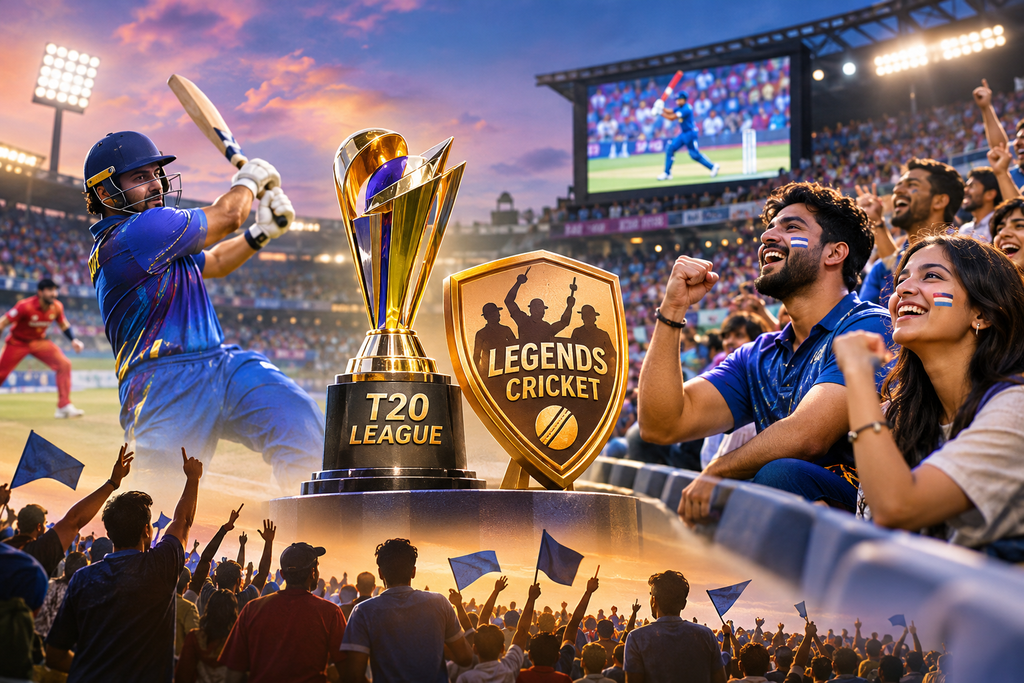
Domestic T20 leagues have changed how cricket is organised, presented, and consumed. Instead of depending entirely on international fixtures, fans can follow regional teams, franchise competitions, and emerging players across different countries.
One of the biggest attractions is the fast-paced nature of T20 cricket. With each team receiving a maximum of 20 overs, players must make quick decisions, adapt to changing situations, and balance aggressive batting with effective bowling strategies.
The format also makes individual performances more influential. A batter scoring 40 runs from 15 deliveries or a bowler taking two wickets in a crucial over can dramatically change the direction of a match.
Franchise leagues offer several additional attractions:
- Local and international players competing in the same teams.
- Opportunities for young cricketers to perform alongside experienced professionals.
- Regional rivalries that strengthen emotional connections with supporters.
- Regular fixtures that encourage fans to follow an entire tournament.
- Playoffs and finals that create excitement as the competition progresses.
These characteristics make domestic T20 leagues appealing to both dedicated cricket followers and casual viewers.
Legends Tournaments Bring Familiar Cricket Heroes Back to the Field
While domestic leagues focus largely on active professional cricketers, legends tournaments attract audiences through familiar names and established cricketing memories.
Many supporters remember watching players such as Yuvraj Singh, Suresh Raina, Shahid Afridi, AB de Villiers, and Chris Gayle during major international competitions. Seeing former stars participate in organised T20 tournaments allows fans to reconnect with the players who shaped their interest in cricket.
The World Championship of Legends (WCL) is an example of this approach. The tournament brings together well-known cricketers representing national-themed teams, creating opportunities to revisit traditional rivalries in a different competitive environment.
Fans interested in previous tournament results can explore information about the WCL champions, including title-winning teams, past finals, and performances across different editions.
The competition’s winners also illustrate its appeal. India Champions won the inaugural edition in 2024, South Africa Champions claimed the 2025 title, and West Indies Champions won the 2026 tournament.
However, the appeal of legends cricket extends beyond trophies. Supporters also enjoy watching familiar batting styles, established bowling techniques, and the interactions between players who once competed at the highest international level.
For younger audiences, these tournaments provide an introduction to cricketers whose most celebrated performances may have occurred before they began following the sport.
How T20 Leagues Create Stronger Connections Between Teams and Supporters:
Fan engagement involves more than watching a match. It includes following team announcements, discussing player performances, predicting results, and participating in conversations throughout a tournament.
Domestic T20 leagues encourage these activities by giving supporters teams they can follow over several weeks.
Regional Identity and Team Loyalty
Many franchise competitions connect teams with particular cities or regions.
For example, IPL teams represent cities such as Mumbai, Chennai, Bengaluru, and Kolkata. Supporters often develop loyalty based on their hometown, family traditions, favourite players, or previous tournament experiences.
This connection can continue even when team squads change between seasons.
Regional identity also encourages friendly rivalries, discussions between supporters, and interest in matches involving competing cities.
Familiar Players and New Talent
T20 leagues bring together established international cricketers and emerging domestic players.
A young batter performing well against an experienced international bowler can quickly attract attention. Similarly, an uncapped player delivering an important performance during a playoff match may become a recognised name among supporters.
These moments give fans reasons to follow individual careers beyond a single tournament.
Competitive League Structures
Points tables, net run rate, qualification scenarios, and knockout matches create additional interest.
Supporters do not necessarily follow only their favourite team’s fixtures. They may also watch other matches because the results affect playoff qualification.
This interconnected structure encourages consistent engagement throughout the season.
How Legends Cricket Uses Nostalgia to Build Fan Interest:
Nostalgia is one of the strongest emotional elements in legends tournaments.
Cricket supporters often associate particular players with memorable moments, including World Cup victories, dramatic run chases, outstanding bowling spells, and historic rivalries.
When those players return for a legends competition, fans have an opportunity to reconnect with those memories.
However, nostalgia alone does not guarantee a successful tournament.
Matches still need meaningful competition, clear rules, professional organisation, and accessible coverage. Supporters are more likely to remain interested when the cricket itself provides entertainment rather than relying entirely on famous names.
Legends tournaments can also encourage conversations between generations.
Older supporters may explain why a particular player was important during an earlier era, while younger viewers can discover the techniques and playing styles that made those cricketers popular.
This exchange helps preserve cricket’s history while introducing it to new audiences.
The Role of Digital Platforms in Modern Cricket Engagement:
Digital technology has significantly changed how cricket fans follow domestic leagues and legends tournaments.
Previously, television broadcasts and newspaper reports were among the primary ways to follow matches. Today, supporters can access scores, highlights, commentary, statistics, and tournament discussions through multiple digital channels.
Live Scores and Match Updates
Not every supporter can watch an entire match.
Live-score websites and mobile applications allow fans to follow developments while travelling, working, or studying.
Ball-by-ball commentary, partnership details, player statistics, and wicket notifications help audiences remain connected without watching a live broadcast.
Short Videos and Match Highlights
Short-form cricket content has become an important part of the fan experience.
A spectacular catch, an unusual dismissal, or a last-over finish can generate discussion long after the match has ended.
Highlights also help supporters discover tournaments they may not have followed previously.
For smaller domestic competitions, accessible video coverage can introduce regional players to audiences beyond their immediate communities.
Social Media Discussions
Social media provides a space for supporters to discuss team selections, tactical decisions, and individual performances.
Fans share opinions about batting orders, bowling changes, player form, and qualification possibilities.
These conversations keep tournaments visible between fixtures and encourage audiences to return for upcoming matches.
However, supporters should distinguish verified tournament information from speculation, especially when discussing injuries, squad changes, and fixture announcements.
Domestic T20 Leagues Support the Development of Emerging Players:
Beyond entertainment, domestic T20 competitions provide valuable opportunities for developing cricketers.
Young players gain experience competing under pressure, adapting to different opponents, and performing in front of large audiences.
Playing alongside established professionals can also expose them to different approaches to preparation, fitness, field placement, and match strategy.
For batters, T20 cricket demands the ability to score against varied bowling styles while maintaining awareness of the match situation.
Bowlers must develop skills such as yorkers, slower deliveries, variations in pace, and accurate execution during the final overs.
Fielders are expected to contribute through athletic catches, quick throws, and effective boundary protection.
Although T20 success does not automatically translate into success in longer formats, these competitions can provide useful experience and greater visibility.
Strong domestic performances may also help selectors identify players who deserve consideration for higher levels of competition.
How Legends Tournaments Differ From Domestic Franchise Leagues:
Although both formats use T20 cricket to entertain audiences, their main attractions are different.
| Feature | Domestic T20 leagues | Legends tournaments |
| Main participants | Active domestic and international professionals | Primarily former international stars |
| Main attraction | Current competition, emerging talent, franchise loyalty | Familiar players, nostalgia, historic rivalries |
| Fan connection | City, region, franchise, and individual players | National cricket memories and celebrated careers |
| Player development | Important opportunity for emerging cricketers | Greater emphasis on entertainment and legacy |
| Long-term interest | Team performance, player transfers, qualification | Former stars, memorable encounters, tournament history |
These differences allow both types of competitions to appeal to overlapping audiences without offering identical experiences.
A supporter might follow the IPL to watch emerging Indian talent while also enjoying a legends tournament featuring players remembered from earlier international competitions.
Rather than competing for exactly the same audience, the two formats can complement each other.
Why Cricket Fans Remain Engaged Between Major International Tournaments:
International cricket has traditionally provided some of the sport’s biggest moments, particularly through ICC tournaments, bilateral series, and historic rivalries.
However, international schedules do not always provide continuous coverage of every player’s career or every country’s domestic talent.
T20 leagues help fill these gaps.
When one competition finishes, another may begin in a different cricketing region. This creates opportunities for supporters to follow matches across multiple seasons and countries.
For example, a fan interested in Australian cricket might follow the Big Bash League, while someone interested in Caribbean cricket may watch the CPL.
Supporters who enjoy watching experienced former players may also follow legends competitions.
This variety makes cricket more accessible to people with different interests.
Some fans prefer high-scoring matches and aggressive batting. Others enjoy tactical bowling, developing players, historical rivalries, or the emotional connection associated with famous cricket personalities.
Providing several types of competitions allows cricket to serve these preferences without depending on one tournament.
The Commercial and Community Impact of T20 Cricket:
Domestic T20 leagues have also created opportunities for broadcasters, sponsors, local businesses, and sports organisations.
Tournament coverage can generate interest in broadcasting rights, sponsorship partnerships, merchandise, ticket sales, and digital content.
Host cities may benefit from visitors attending matches, particularly when fixtures attract travelling supporters.
Local hospitality businesses, transport services, and food vendors can experience additional demand during major sporting events.
The scale of these benefits varies depending on the tournament, venue, attendance, and commercial arrangements.
Legends tournaments may offer similar opportunities, although their commercial structures and audience sizes can differ significantly from established franchise leagues.
Community engagement is another important consideration.
Cricket events can encourage local participation through coaching programmes, school initiatives, fan activities, and opportunities for young people to interact with experienced players.
When these activities are organised responsibly, they can help extend a tournament’s impact beyond match-day entertainment.
What Makes a T20 Tournament Successful in the Long Term?
A tournament needs more than famous players or aggressive marketing to maintain audience interest.
Long-term success depends on several connected factors.
Competitive matches: Supporters need meaningful contests in which teams have a realistic opportunity to succeed.
Reliable scheduling: Clear fixture information and timely updates help audiences plan their viewing.
Accessible coverage: Television broadcasts, streaming options, highlights, and score updates make tournaments easier to follow.
Player participation: Recognisable players can attract initial attention, while strong performances help maintain interest.
Transparent organisation: Clear rules, accurate statistics, and reliable communication strengthen confidence in a competition.
Consistent fan engagement: Match previews, interviews, behind-the-scenes content, and post-match analysis provide reasons to remain involved between fixtures.
For legends tournaments, organisers must also consider player fitness, availability, and realistic expectations about performance.
Former international cricketers may still demonstrate considerable skill, but legends competitions should not be presented as identical to contemporary elite international cricket.
Understanding these differences allows fans to appreciate each format on its own terms.
The Future of Domestic T20 and Legends Cricket:
The future of cricket entertainment is likely to involve a combination of established competitions, emerging leagues, and new digital experiences.
Domestic T20 tournaments will continue to face challenges involving player availability, scheduling conflicts, financial sustainability, and competition for audience attention.
Smaller leagues may need to focus on strong regional identities, accessible coverage, and developing local talent rather than attempting to replicate the commercial scale of the IPL.
Legends tournaments have a different opportunity.
By combining familiar cricket personalities with organised competition, they can introduce historical cricket rivalries to modern audiences.
Digital platforms may further support this process through archived match footage, player interviews, interactive statistics, and short-form highlights.
However, sustainable growth will depend on maintaining credibility, delivering competitive matches, and providing an enjoyable experience for supporters.
The strongest tournaments will be those that understand what their audiences value and consistently deliver it.
Conclusion:
Domestic T20 leagues and legends tournaments have expanded the ways cricket fans connect with the sport.
Franchise competitions offer opportunities to discover emerging talent, support regional teams, and enjoy competitive cricket throughout the year. Legends tournaments bring former international stars back into focus, allowing supporters to revisit familiar rivalries and introduce younger audiences to cricket’s history.
Digital coverage strengthens both formats by making matches, highlights, statistics, and discussions more accessible.
Ultimately, their lasting appeal comes from offering different experiences within the same sport. Domestic leagues help shape cricket’s present and future, while legends tournaments celebrate the players and memories that helped build its global following.